
Why steep and high roofs carry premium pricing in Auckland — safety systems, slower work rates, material handling, and how to read quotes fairly.
Steep roof cost factors are the honest answer to a common Auckland quoting mystery: why two houses with the same floor area get very different roofing prices. The short version — pitch and height change the job. The same square metre of painting, repair, or re-roofing on a steep two-storey roof needs more safety equipment, moves slower, and handles materials harder than on a walkable single-storey hip. None of that is padding; all of it is physics and safety law.
Auckland serves up plenty of steep-roof stock: villa and bungalow pitches in the central suburbs, steep chalet-style homes in the bush suburbs, A-frames, and the tall skinny infill builds of recent years where height does the work pitch used to.
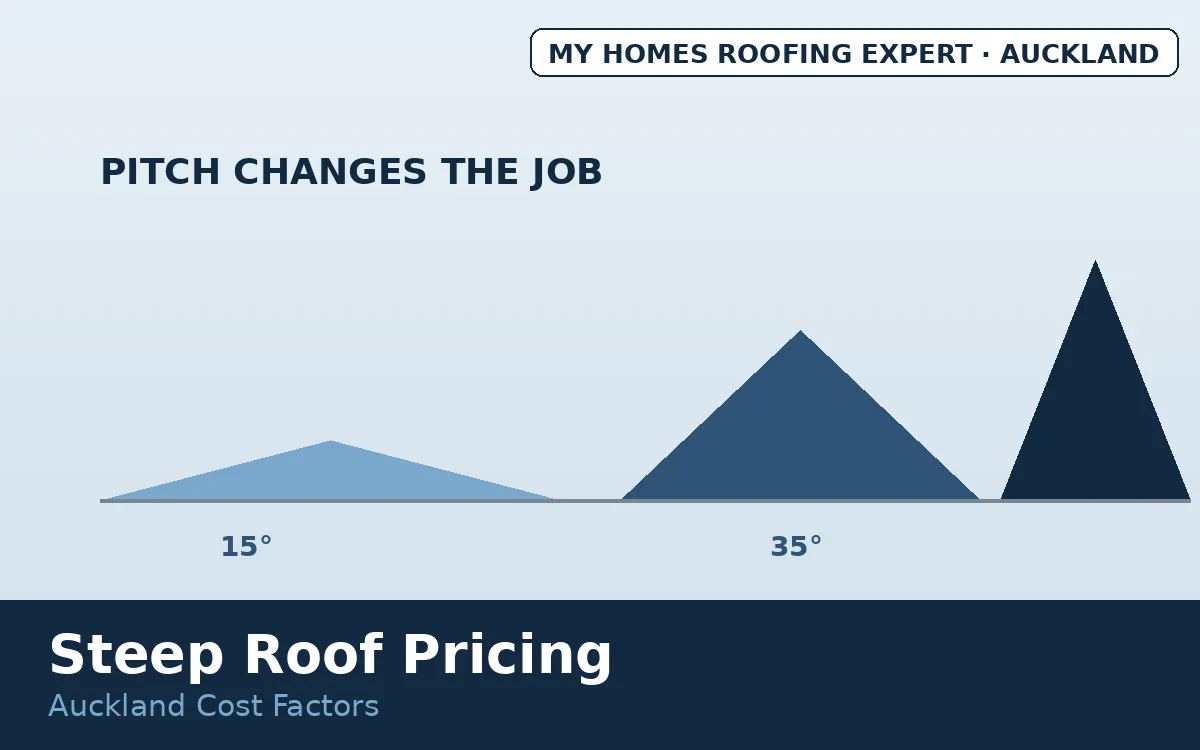
Why do steep roofs cost more to work on?
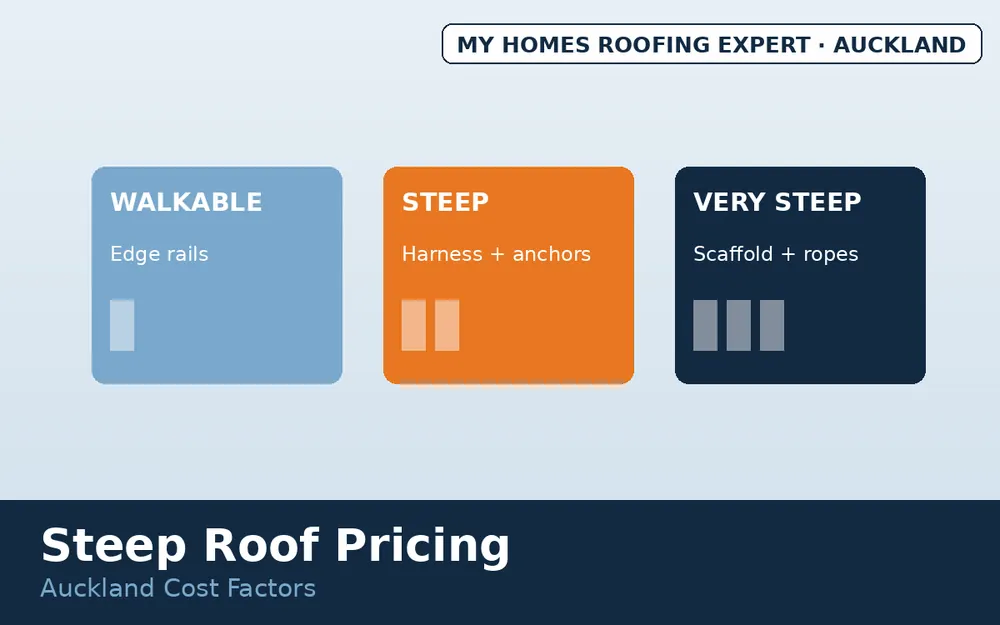
Direct answer: safety systems, slower production, and harder logistics — three multipliers on the same work. Safety: beyond walkable pitch, workers need fall restraint — harness lines to roof anchors, edge protection or scaffold below, and planned movement on the surface; the gear, setup time, and certification all cost real money (our scaffolding cost guide covers the access side). Production: a painter who covers a walkable roof briskly covers a 40-degree roof in managed, clipped-in stages — the hours per square metre genuinely multiply. Logistics: every sheet, tile, bucket, and tool must be moved up, secured against sliding, and handled without becoming a falling object; on tall or tight Auckland sites, material movement alone can shape the programme.
In short
Steep and high roofs price higher because the same work takes more equipment and more hours done safely — expect the difference to show in access line items and labour, not materials. Compare quotes between similar homes, and treat a steep-roof quote with no visible access provision as a question, not a bargain.
How do pitch and height show up in your quote?
Look for these honest line items: access — edge protection, scaffold, or specialised systems, priced to your actual elevations; anchors — installing or certifying roof anchor points where harness work is needed; labour rates or hours reflecting managed movement on the pitch; and sometimes plant — hoists or elevated platforms on tall, tight sites. On the materials side, steep roofs also carry slightly more area than their footprint suggests — pitch geometry adds real square metres, which is why quotes measure the roof, not the floor plan. Our roof pitch guide explains the geometry, and the roof cost calculator gives ballparks that account for it.
The quiet upside of a steep roof
Before resenting the premium, count the compensations. Steep roofs shed Auckland rain fast and hold little standing debris; moss and lichen colonise them slower than low-pitch surfaces (a genuine saving against moss treatment cycles); leaks are rarer because water spends less time finding gaps; and steep tile and steel roofs routinely outlast shallow equivalents. Each professional visit costs more — but well-built steep roofs need fewer of them. Lifetime cost often favours the pitch.
Cost, risk, and safety factors
The safety point deserves its own paragraph: steep roofs are where DIY ambition gets hurt. Surfaces that look manageable from the ground are treacherous underfoot, especially wet, mossy, or fragile ones, and falls from pitch height cause life-changing injuries every year in New Zealand. Working at height carries genuine legal duties as well as physical risk — leave steep-roof work entirely to trained, equipped professionals, and monitor your own roof from the ground with binoculars between visits. The premium on your quote is partly the price of nobody getting hurt on your property.
Get a fair quote on a steep Auckland roof
My Homes Roofing Expert prices steep and high roofs across Auckland transparently — access itemised, hours honest, safety never optional. For a free, no-obligation quote on painting, repair, or re-roofing, call 022 501 9921 or contact us online.
Frequently asked questions
Why do steep roofs cost more?
Safety systems, slower managed work, and harder material handling — the same metre takes more hours and gear.
What pitch counts as steep?
Methods change noticeably beyond comfortable walking pitch, roughly past 25–30 degrees, with full restraint on villa-steep roofs.
How much is the premium?
Too job-specific to promise — it appears in access and labour lines, and varies with height and site.
Any upside to steep roofs?
Faster shedding, less moss, fewer leaks, longer life — lifetime maintenance often costs less.
Why is two-storey pricing higher again?
Height multiplies the same factors — scaffold, setup, and slower logistics. Compare like with like.
Topics covered
- steep pitch roofing price
- two storey roof cost
- difficult access roofing Auckland
- high roof painting cost
- roof pitch pricing