
Test before touching, never disturb suspect material, and treat removal and significant work as regulated specialist jobs. The homeowner's safe role is to keep the roof undisturbed, arrange testing, and engage appropriately qualified people — the responsible path for both health and compliance.
Fibre cement roof repair questions arrive attached to a serious caution, and this guide leads with it rather than burying it: older fibre cement roofing may contain asbestos, so the first step is always testing — never assumptions, and never disturbance. The corrugated Super Six and flat fibrolite sheets on many older Auckland buildings come from eras when asbestos was a common ingredient, and the only safe way to approach them is to confirm what they are before anyone touches them.
This is therefore as much a safety guide as a repair guide — and the honest headline is that the homeowner's job is to test and engage qualified help, not to handle the material.
Can fibre cement roofs be repaired safely?
Direct answer: they can be assessed and managed safely, but only after testing, and only within the regulated processes that asbestos-containing material requires. The framework: test first, always — because earlier fibre cement commonly contained asbestos, because you cannot identify it by sight, and because disturbing asbestos-containing material releases the fibres that make it hazardous; where material tests clear or is confirmed sound and is left undisturbed, limited management and repair can be appropriate.
And where material must be cut, drilled, broken, or removed, licensed processes, disposal rules, and regulatory requirements govern the work — specialist territory, not DIY. The decision between managing in place and removing belongs with people qualified to make it under current regulations, which is the through-line of this whole guide. Our asbestos roof removal guide covers the removal pathway, and the re-roofing that often follows sits in house re-roofing.
What never to do — the disturbance list
Because disturbance is precisely what releases fibres, the prohibitions are firm and worth stating plainly: never cut, drill, sand, or grind suspect fibre cement — power tools on asbestos-containing material are among the worst things that can be done; never waterblast — high pressure spreads fibres across the whole roof and surroundings, the same lesson our washing methods guide teaches for other reasons, here with health stakes; never break or snap sheets — including dropping things on them or levering them.
And never walk on the roof — fibre cement sheets are fragile, and fall-through is a serious risk independent of the fibre hazard, the fragility caution our fragile-surfaces guide raises and which applies doubly here. The positive instruction is simple: leave it undisturbed, keep people off it, and get it tested. A roof safely left alone is a roof managing its risk; a roof being cut into without testing is the scenario the regulations exist to prevent.
The decision pathway — manage, repair, or remove
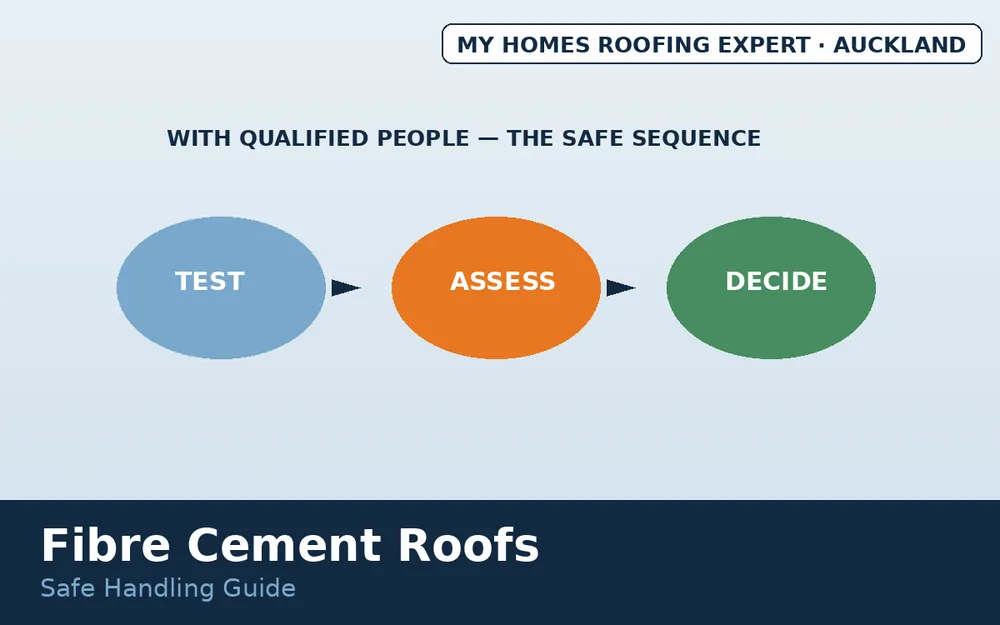
Once testing has spoken, the path follows condition and regulation, decided by qualified people: sound and undisturbed — asbestos-containing material in good condition is sometimes best managed in place under appropriate guidance, since undisturbed material is not releasing fibres and removal itself carries disturbance risk; minor damage on sound roofs — limited management may be possible within regulated processes, but the threshold for specialist involvement is low and the homeowner's role remains testing-and-engaging; deteriorating, broken, or weathered material.
Often points toward professional removal and re-roofing, the regulated removal our removal guide details, followed by a modern roof per the conversion guides; and any cutting, drilling, or removal — regulated work with licensing and disposal requirements, full stop. Current official guidance — WorkSafe and the relevant regulations — is the authority throughout, and requirements can vary by situation, so the responsible move is always to check current rules and engage appropriately qualified people rather than rely on a blog, this one included.
Cost, risk, and responsible-action factors
The cost conversation properly follows the testing result and the qualified assessment — management, regulated repair, and removal-and-replacement occupying very different price brackets — and is not something to estimate ahead of knowing what the material is. The risk ledger is health and compliance, which is exactly why this guide keeps returning the homeowner to the same two actions: test, and engage qualified people. It is the rare roofing topic where the most helpful advice is to do less yourself, not more.
How Do You Get fibre cement assessed responsibly in Auckland?
My Homes Roofing Expert helps Auckland owners navigate older fibre cement roofs the right way — testing first, qualified pathways, re-roofing where removal is the outcome. Call 022 501 9921 or get in touch for guidance on the safe next step.
What Questions Do Auckland Homeowners Ask?
Can fibre cement roofs be repaired safely?
Assessed and managed safely, yes — but only after testing and within the regulated processes asbestos-containing material requires.
Why test first?
Older fibre cement commonly contained asbestos, you cannot tell by looking, and disturbing it releases hazardous fibres.
What should I never do?
Never cut, drill, sand, waterblast, break, or walk on suspect material — disturbance is what releases fibres.
Repair or removal?
It depends on condition and testing, decided by qualified people under current regulations.
Who can work on it?
Removal and significant disturbance is regulated, licensed work — test, then engage appropriately qualified people.
Topics covered
- super six roof repair
- old corrugated asbestos roof
- fibrolite roof Auckland
- asbestos roof testing
- fibre cement handling