
Skylight glazing compared for NZ — double glazed glass vs acrylic domes, heat, noise, condensation, and matching glazing to the room below.
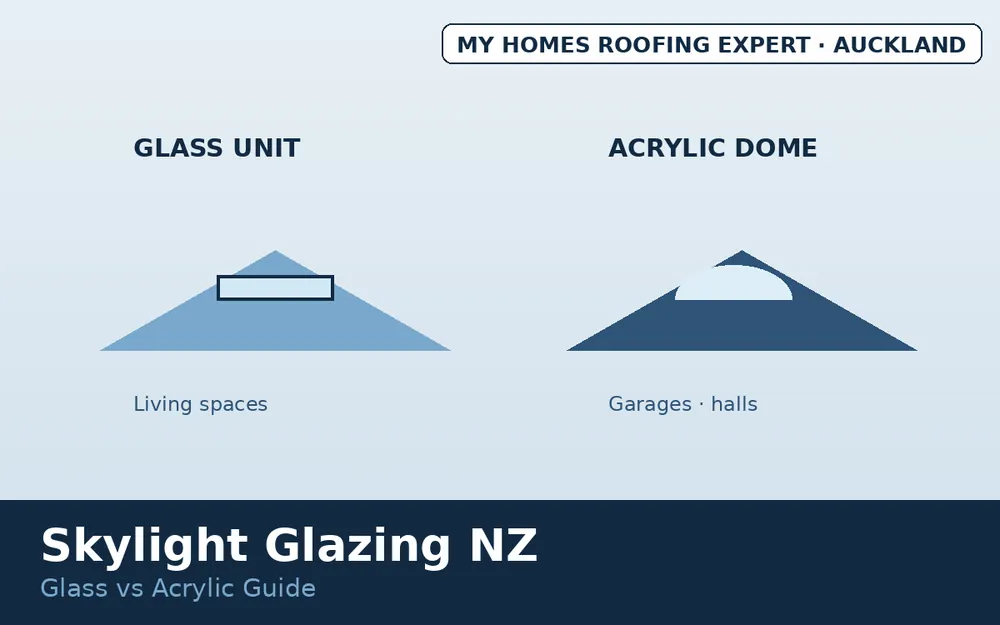
Skylight glazing options divide by the room underneath them: over living spaces, modern double glazed glass units — low-E coated, laminated inner pane — have made overhead glazing as comfortable as a good window; over garages and utility spaces, acrylic domes keep doing the economical daylight job they always did. The years when a skylight meant winter drips and summer bake are a glazing generation behind us — for owners who specify accordingly.
The physics is unusually stark overhead: a skylight faces the night sky in winter (the coldest radiant surface a room ever sees) and the full sun in summer — glazing specification works harder in a roof than anywhere else in a house.
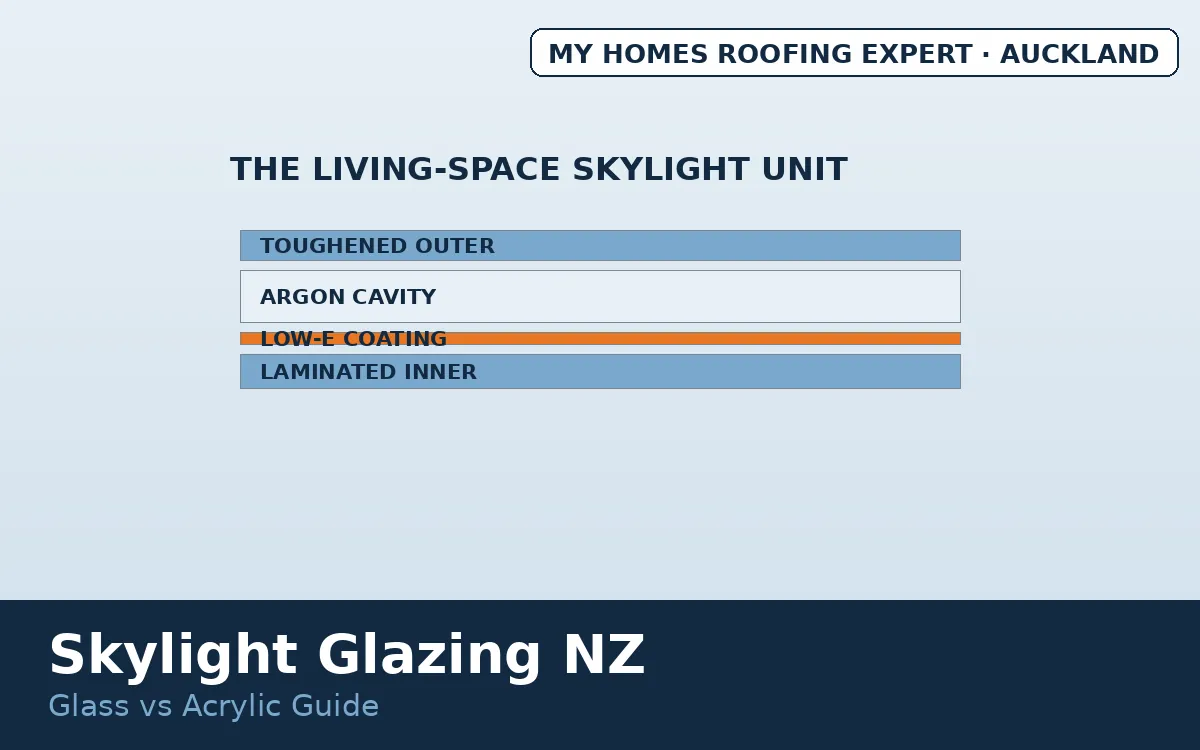
What skylight glazing should you choose?
Direct answer: double glazed, low-E, laminated-inner glass over living spaces; multi-skin acrylic domes over utility spaces. The glass unit's anatomy earns each layer: toughened outer pane taking hail and branches; insulating cavity (often argon-filled) cutting the winter heat loss that single glazing haemorrhages skyward; low-E coatings reflecting summer radiant gain while keeping winter warmth in — the difference between a skylight that heats a room and one that lights it; and laminated inner pane holding together if ever broken, the overhead-safety expectation quality units meet by default. Acrylic's case: multi-skin domes insulate respectably, cost a fraction, and over garages, hallways, and commercial space spend the savings sensibly — the same honest tiering our translucent sheets guide applies to their flat-sheet cousins. Brand-format context lives in our Velux vs dome guide.
In short
Let the room choose: bedrooms and living areas deserve double glazed low-E laminated units; garages and corridors do fine under modern acrylic domes. Either way, the flashing kit around the glazing decides weathertightness — glazing quality and installation quality are separate purchases, both mandatory.
Condensation — the overhead problem glazing mostly solves
Winter skylight drip is the complaint that built acrylic's bad reputation, and it is usually condensation, not leakage: warm moist room air rising to the coldest surface in the house and giving up its water. The glazing-era fixes: insulated units keep the inner face warm enough to stay dry through ordinary winters; condensation channels in quality frames catch and evaporate the exceptional mornings; trickle ventilation on openable units exhausts the moist air at its gathering point; and room-side moisture management does the rest. Persistent drip on a modern unit earns diagnosis — our condensation guide separates dew from the genuine flashing leaks whose repair is different work entirely.
Specification details around the glazing
The unit is half the purchase: flashing kits matched to your roof profile — tile, corrugate, trapezoidal each take different kits, and improvised flashings are tomorrow's leaks; pitch ratings — units carry minimum and maximum pitch specifications, with low-pitch installations wanting specific models; sizing and placement — light wants north-ish orientation managed by low-E, while placement between rafters or with framed openings changes scope (the structural threshold where consent questions can arise — rules vary by situation, so check with Auckland Council or a building professional when openings change framing); and blinds and glazing tints for rooms where summer control matters beyond coatings. Value context sits in our skylight value guide and pricing in the installation cost guide.
Cost, risk, and maintenance factors
Glazing tiers price predictably: domes under entry glass units under low-E laminated flagships — with installation and flashing constant across them, which is why upgrading glazing is the cheap half of going premium. Maintenance: occasional glass cleaning, gasket checks at inspection age, and condensation-channel clearing on openable units. Risks concentrate at installation and at age — and skylights are roof penetrations, so every rule about professional height work applies doubly around a hole with glass in it.
Get skylight glazing specified in Auckland
My Homes Roofing Expert installs and re-glazes skylights across Auckland — units matched to rooms, flashing kits matched to profiles, condensation diagnosed honestly. Call 022 501 9921 or book an inspection.
Frequently asked questions
What glazing should I choose?
Double glazed low-E laminated units over living spaces; modern acrylic domes over utility rooms.
Why double glazing overhead?
Skylights face the coldest and hottest surfaces a room sees — the cavity tames both directions.
Why laminated glass?
Overhead safety — broken laminate holds together instead of falling.
Why does my skylight drip?
Usually condensation on cold glazing, not a leak — glazing and ventilation are the cures.
Are domes obsolete?
No — they remain the economical answer over garages, halls, and commercial space.
Topics covered
- double glazed skylight
- acrylic dome skylight
- skylight condensation NZ
- laminated skylight glass
- low-E skylight