
Natural slate for heritage truth and century-class service at premium weight and price; synthetic slate for the silhouette on modern framing and budgets. On old slate roofs, suspect the nails before the stone — and on heritage-scheduled buildings, check council expectations before changing anything visible, since rules can vary by property.
Slate roofing NZ work is mostly stewardship: the country's natural slate sits on heritage churches, civic buildings, schools, and the prestige homes of an era that imported Welsh stone by the shipload — and a century later, much of that stone is still good while everything underneath it asks for attention. Alongside the heritage trade, synthetic slate offers the look in lightweight modern form for new work. Two materials, one silhouette, very different projects.
Auckland's slate population concentrates where the money was: Parnell, Remuera, the church rooflines of the inner suburbs, and the institutional buildings the city built to last.
Natural or synthetic — which slate conversation are you in?
Direct answer: heritage buildings stay natural; new projects wanting the look usually go synthetic. Natural slate's case: the stone outlasts a century, ages into rather than out of beauty, and on heritage-scheduled buildings is often the expected like-for-like material — with salvage and imported stone both supplying repairs. Its demands: weight (framing engineered or verified for it, per our roof weight guide), craft installation in a specialist trade, and premium budgets. Synthetic slate's case: a fraction of the weight — ordinary framing carries it — at a fraction of the price, with quality brands delivering convincing texture and long warranties; its risks live in brand variance, where cheap product fades and embrittles under NZ UV. The honest filter for synthetic: proven warranties and local track record over catalogue photography. Both routes run through our tile roofing practice, and heritage work through central Auckland where the stock lives.
The heritage repair reality — nail sickness and its remedies
The defining old-slate failure is the one owners least expect: the stone is fine; the nails are gone. Original fixings corrode through after eighty or a hundred years, and slates begin slipping one by one — the rattling, sliding symptom heritage building managers know well. The remedy ladder: clip repairs (tingles) re-securing individual slips, honest as triage and visible as a tally of the roof's age; partial strip and re-fix on the worst elevations; and the definitive cure, full strip-and-relay — original slates lifted, sorted, and re-laid on new battens, underlay, and non-corroding fixings, with salvage stock filling the breakage gap. Relay projects also renew the flashing suite, where copper earns its pairing with stone by matching its lifespan. All of it is specialist craft on fragile, steep, heavy material — surveying included, since slate punishes untrained feet and untrained feet punish slate.
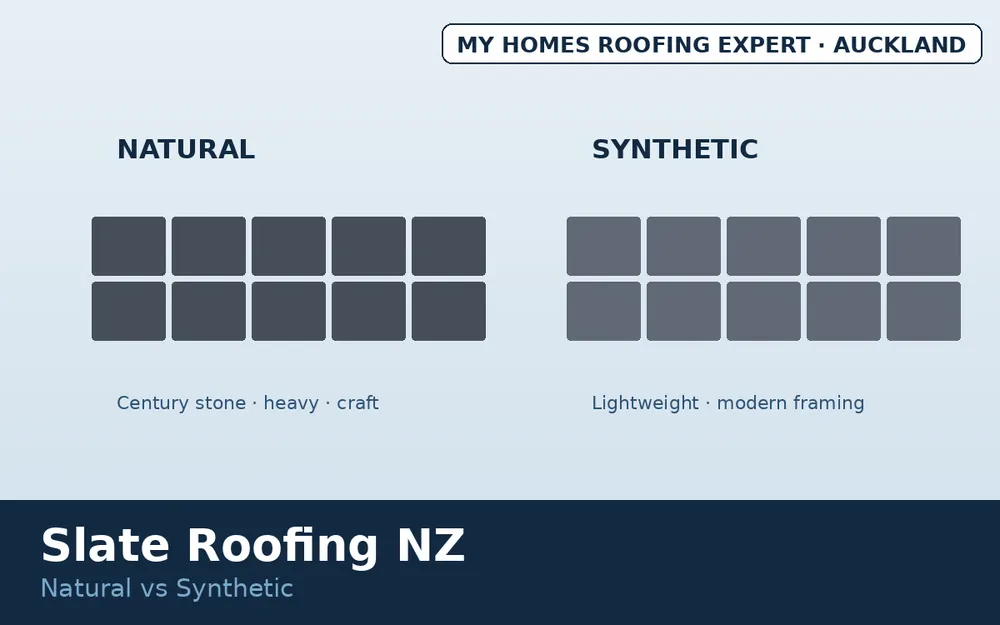
Specifying synthetic slate well
The synthetic market rewards diligence: UV credentials — NZ light is a severe test, so favour products warranted and proven in comparable climates; fixing systems — quality composites install on engineered patterns rated for wind zones, not generic nailing; texture honesty — see installed roofs, not samples, because flatness reads from the street; fire and weight data documented for consent where applicable; and colour through the body rather than surface coating where available, for the same fade logic our tile comparison explains. Specified well, synthetic slate is a genuinely good roof; specified from a price list, it is a fading one.
What Cost, Risk and Maintenance Factors Apply?
Budgets: natural slate repair prices to survey and relay projects to scale — heritage-grade work at heritage-grade rates; synthetic slate lands nearer premium metal territory installed. Maintenance: natural slate wants gutter discipline, prompt slip repairs, and professional-only access; synthetic follows its manufacturer's modest care schedule. Risks concentrate at specification and access — and on scheduled buildings, in paperwork, where early council conversations cost less than late ones.
How Do You Get slate assessed in Auckland?
My Homes Roofing Expert surveys, repairs, and re-lays slate across Auckland's heritage stock, and specifies synthetic alternatives honestly for new work. Call 022 501 9921 or arrange an assessment.
What Questions Do Auckland Homeowners Ask?
Can you get slate in NZ?
Yes — imported natural stone and ready synthetic alternatives, with heritage repair the main natural-slate trade.
How long does natural slate last?
The stone commonly outlasts a century — nails, battens, and flashings age first.
What is synthetic slate?
Lightweight composite tiles in slate form — quality varies by brand, so specify on warranty and track record.
Too heavy for NZ houses?
Natural slate needs engineered framing; synthetic's lightness is its advantage.
Why do old slates slip?
Nail sickness — corroded fixings, sound stone. Remedies run from clips to full strip-and-relay.
Topics covered
- natural slate roof
- synthetic slate Auckland
- heritage slate repair
- slate roof restoration
- composite slate tiles