
Concrete vs clay roof tiles compared for NZ homes — weight, colour life, porosity, heritage fit, and the maintenance each demands.
Concrete vs clay roof tiles is the masonry-roof question, and in New Zealand it is also a tale of two eras: clay — terracotta fired with its colour all the way through — crowns the early bungalow streets and heritage stock; concrete — pigment-surfaced, economical, profile-rich — built the post-war suburbs and remains the volume tile today. Both are long-serving, heavy, durable systems. The honest differences live in colour life, surface maintenance, and what the streetscape expects.
Auckland holds both in quantity: clay across Mt Eden, Sandringham, and the bungalow belt; concrete in tens of thousands across Glenfield, Papatoetoe, Pakuranga, and every suburb the 1960s–80s built.
Are concrete or clay tiles better for your roof?
Direct answer: clay for colour permanence and heritage; concrete for economy and modern profile range — with both delivering long structural lives. Choose clay when: the house is heritage or character stock where terracotta belongs; you want colour that is fired through the tile and simply does not fade the way surfaces do; and the budget accepts its premium. Choose concrete when: you are matching or maintaining NZ's dominant existing tile stock; profile and colour range matter — concrete's catalogue is wide; or economics lead, since concrete prices meaningfully under clay. Both ride the same substructure logic — battens, underlay, and the ridge bedding and pointing system whose maintenance cycle they share — and both live inside our tile roofing Auckland service.
In short
Clay keeps its colour for generations and owns heritage streets; concrete owns the volume market with mid-life recoating as its known cost. Both are 50-year-class systems on sound framing — the decision is mostly aesthetics, era, and budget, with weight engineering checked whenever materials change.
How do they age differently?
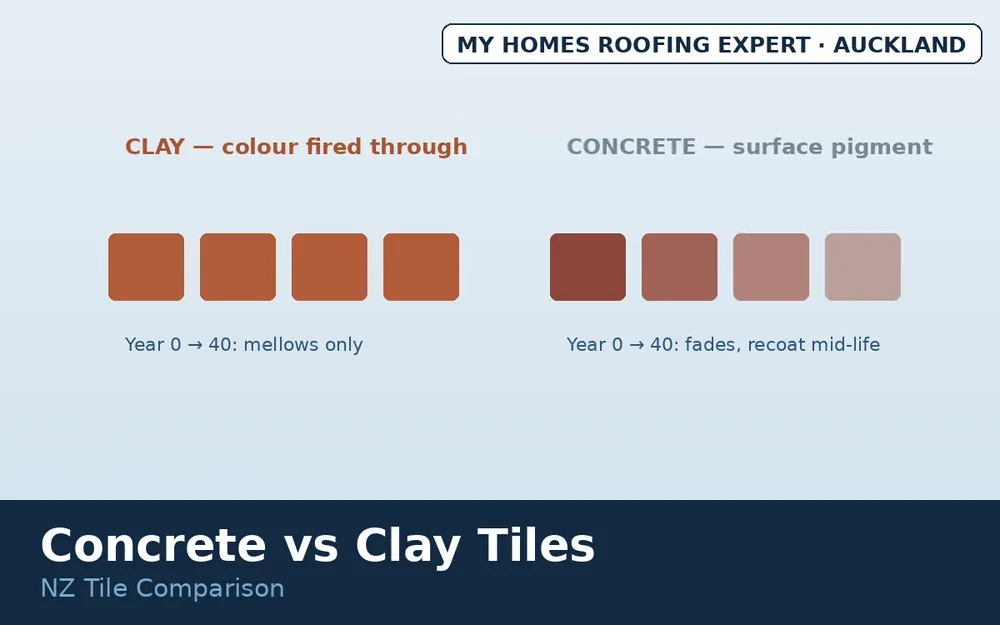
This is the heart of the comparison. Clay: colour is the fired body itself, so decades of UV and rain mellow rather than fade it; the surface stays dense and sheds water and moss comparatively well; the aging risks are mechanical — brittle tiles cracking underfoot or from impact, and the universal ridge-mortar cycle. Concrete: the pigmented surface layer is the weather worker, and NZ sun and rain wear it over 20–30 years — colours pale, the surface opens, porosity rises, and moss takes the invitation, which is why moss management and mid-life cleaning, treatment, and recoating are the standard concrete-tile interventions, restoring both look and shedding. Structurally, both families keep going long after their surfaces date — porous, drinking tiles are the genuine end-of-life signal, not faded ones, and an inspection tells the difference, per our concrete tile repair guide.
Weight, framing, and the change-of-material question
Both tiles are heavy systems — concrete generally the heavier per square metre — and both assume framing designed for masonry load. Like-for-like replacement inherits that engineering comfortably; the caution belongs to changes: tile onto a structure built for light roofing needs engineering confirmation, and the reverse switch — tile to lightweight metal — has its own bracing and design considerations, as our roof weight guide explains. Heritage and special character areas add the streetscape layer: visible material changes on character stock deserve a council check first, since rules can vary by property.
Cost, risk, and maintenance factors
Budget shape: concrete buys the roof cheaper and schedules a mid-life restoration; clay pays more upfront and skips the fade chapter. Shared line items for both: ridge rebedding and repointing on mortar's schedule, broken-tile replacement (sourcing covered in our tile matching guide), underlay condition at re-roof time, and the standing tile-roof rule — fragile, slippery, strictly professional territory underfoot, monitored from the ground with binoculars between visits.
Get a tile roof assessed in Auckland
My Homes Roofing Expert restores, repairs, and replaces concrete and clay tile roofs across Auckland — surfaces read honestly, structure checked, free no-obligation quotes. Call 022 501 9921 or get in touch.
Frequently asked questions
Concrete or clay?
Clay for permanent colour and heritage; concrete for economy and profile range — both long-serving.
Which lasts longer?
Both pass 50 years structurally; clay's colour outlasts concrete's surface, which wants mid-life recoating.
Which is heavier?
Concrete, generally — both need masonry-rated framing, checked when materials change.
Why do concrete tiles fade?
The pigmented surface weathers under UV and rain — cleaning, treatment, and recoating restore it.
Can broken tiles be matched?
Usually — current profiles and salvage networks cover most patterns.
Topics covered
- tile comparison NZ
- terracotta roof Auckland
- tile weight roofing
- concrete tile lifespan
- clay tile roof NZ