
Waterborne acrylic is the NZ answer; the live decision is standard versus membrane grade. Standard acrylic refreshes sound surfaces honestly; elastomeric membrane earns its premium on weathered steel, porous tile, and restoration work where thickness and stretch do structural favours. Either way, preparation and film build outrank brand names.
| Topic | Standard waterborne acrylic | Elastomeric membrane acrylic |
|---|---|---|
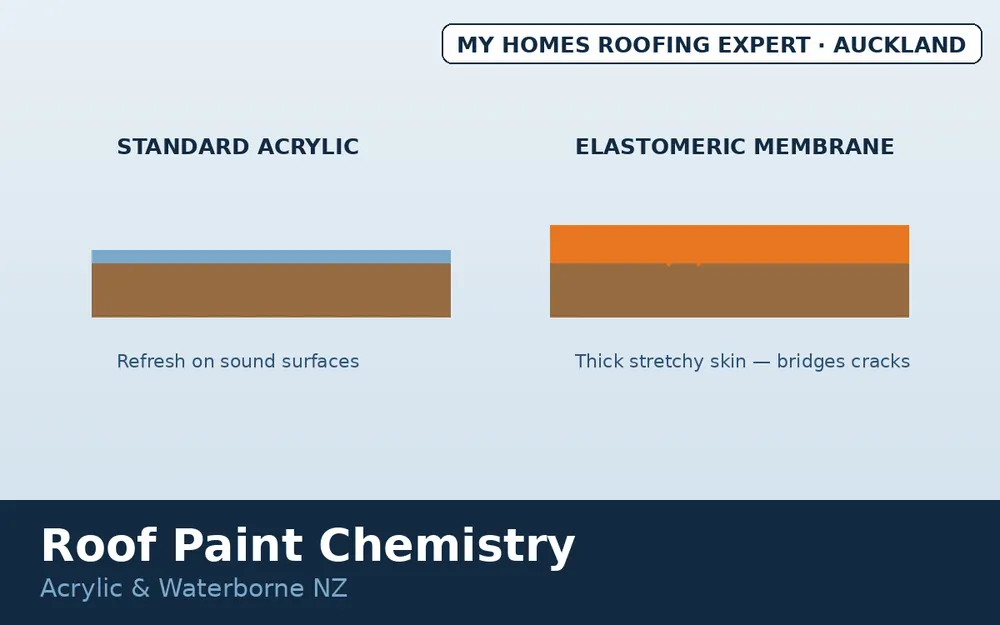
| Best for | Sound surfaces — refreshes them honestly | Tired surfaces: weathered steel, porous tile and restoration work |
| Film build | Manufacturer’s specified minimum | Applied at several times standard film build |
| Behaviour | UV-stable, flexible and breathable | A stretchy skin that bridges hairline cracks and seals porous surfaces |
| Cost | Inside the ranges in the painting cost guide | Above them, on product and labour |
| Solvent-borne systems | Niche primers and adhesion cases only | Topcoats have moved decisively waterborne |
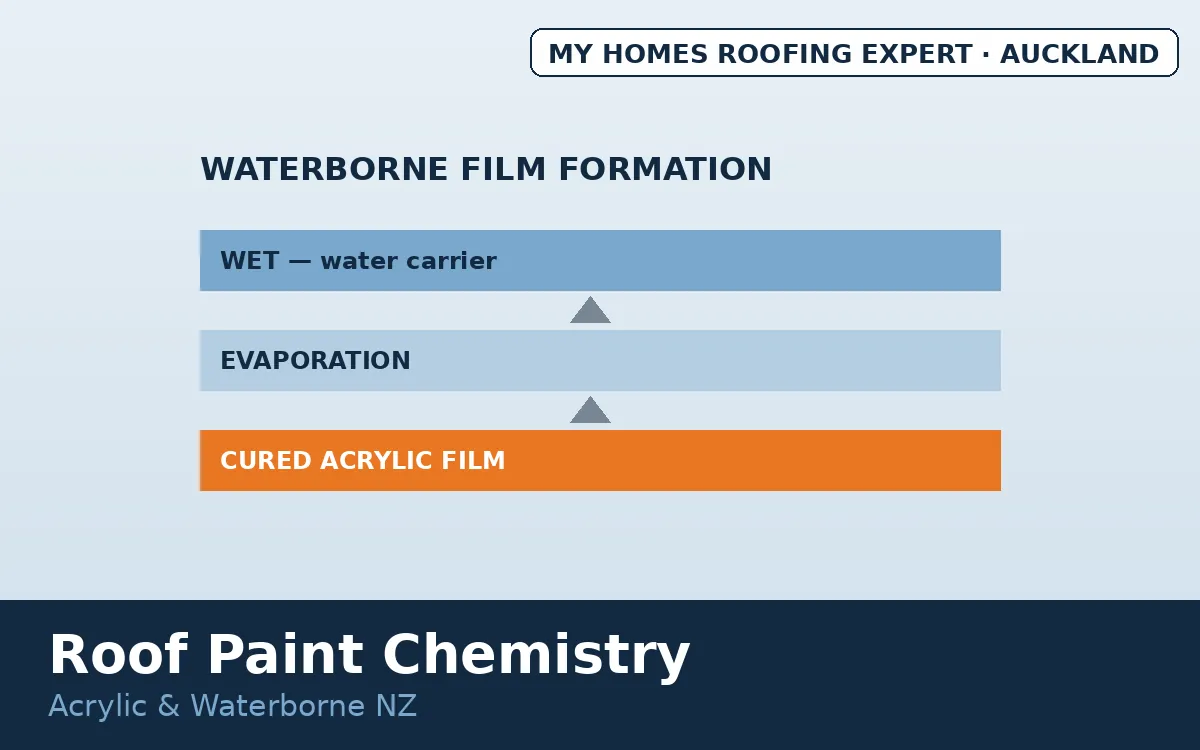
Acrylic roof paint NZ conversations trip over their own vocabulary: acrylic, waterborne, and membrane get used as rivals when two of them are the same thing. The untangling: modern acrylic roof paints are waterborne — water carries the acrylic resin — so the real comparisons are waterborne acrylics versus the solvent-borne systems they replaced, and within acrylics, standard grades versus the high-build elastomeric membrane class. That second split is where roof-painting money is actually decided.
NZ roofs made the waterborne acrylic family their standard for earned reasons: UV stability under southern light, flexibility across thermal cycling, breathability over substrates that hold moisture, and decades of proven service on steel and tile.
What roof paint type is best for NZ roofs?
Direct answer: quality waterborne acrylic systems — standard grades for sound surfaces, elastomeric membrane grades for tired ones. The family's virtues: UV-stable resins that fade and chalk slowly (the aging story our colour fade guide tells); flexibility that rides steel's daily expansion without cracking; breathability letting substrate moisture escape rather than blister; water cleanup and lower-odour application; and compatibility across the steel and tile surfaces Auckland actually owns. Solvent-borne systems — the previous era — retain niche roles in specific primers and adhesion situations, specified case by case rather than chosen by preference. Every reputable system arrives as a system: surface-specific primer, specified coat count, minimum film build — the architecture our paint systems guide maps and our roof painting service applies.
The membrane class — when thickness becomes the point
Elastomeric membrane coatings are acrylics engineered ambitious: applied at several times standard film build, curing into a stretchy skin that bridges hairline cracks, seals porous surfaces, and moves with the roof rather than over it. Their natural work: tile restoration — resealing the weathered, porous surfaces our tile aging guide describes, as the standard final stage of every restoration; tired steel — heavy chalk and micro-crazing that standard paint would honour rather than heal; and waterproofing-adjacent zones where coating shades toward the liquid-membrane territory of our waterproofing guide. The premium is real — more product, more coats, more labour — and so is the differential on the right substrate. On genuinely sound surfaces, standard grades spend the money better; matching grade to substrate is the quote-stage judgment worth paying a professional to make.
What actually separates good roof painting from bad
Chemistry chosen, the outcome is decided elsewhere: preparation — washing, treating, rust conversion, and repairs before any paint, the stage our peeling guide traces every failure back to; primer matching — surface-specific primers are system components, not options; film build honesty — manufacturers specify minimum thickness, and thin application is the invisible corner-cut that surfaces as early failure; weather discipline — waterborne systems want their temperature and dry-window conditions respected; and system integrity — mixing brands and stages voids both performance and warranty. Five disciplines, all installer behaviours — which is why our advice on choosing roof paint is mostly advice on choosing roof painters.
What Cost, Risk and Decision Factors Apply?
Pricing follows grade and prep: standard systems inside the ranges our painting cost guide sets out, membrane systems above them on product and labour. Risks are application risks wearing chemistry's name — and one safety constant: roof painting is height work on surfaces slippery by trade definition, professional territory throughout.
How Do You Get the right system specified in Auckland?
My Homes Roofing Expert matches paint grade to substrate honestly across Auckland — standard where sound, membrane where earned, preparation never skipped. Call 022 501 9921 or request a free quote.
What Questions Do Auckland Homeowners Ask?
Best roof paint type for NZ?
Quality waterborne acrylic systems — standard grades on sound surfaces, elastomeric membrane on tired ones.
Acrylic vs waterborne?
Same family in practice — modern acrylics are waterborne; the real splits are vs solvent systems and vs membrane grades.
What is elastomeric coating?
High-build stretchy acrylic that bridges cracks and seals porous surfaces — the restoration standard.
Where do solvent paints fit?
Niche primers and adhesion cases — topcoats have moved decisively waterborne.
Brand or system?
System and preparation outrank brand — full systems on prepared surfaces win every time.
What else should you know?
What separates good roof painting from bad, whatever the paint?
Five installer behaviours decide the outcome: preparation, meaning washing, treating, rust conversion and repairs before any paint; surface-specific primer matching; film build to the manufacturer’s minimum thickness; weather discipline for waterborne systems; and system integrity, because mixing brands and stages voids performance and warranty. Choosing the paint is mostly choosing the painter.
Topics covered
- waterborne roof coating
- roof paint types
- roof membrane paint Auckland
- elastomeric roof coating
- solvent vs waterborne paint