
Screws, classed for the coast and patterned for the wind, with washers treated as the consumable they are. On older roofs, lead-head conversion and mid-life re-screwing are two of the highest-value services going; on any quote, the one-line fixing questions — what class, what pattern? — sort specification from habit.
Roofing fixings NZ specifications are the smallest line on any quote and the first thing storms audit. Every sheet on every roof holds on through its screws or nails — their thread grip against wind uplift, their washers against water, their coatings against the salt air working on them nightly. Sheets get the brochure; fixings do the holding. And on Auckland's older roofs, the fixings are routinely a generation behind the steel they secure.
This guide covers the working knowledge: screws versus the old lead-heads, corrosion classes, washer aging, and the wind-zone patterns that decide how many fixings a roof deserves.
What fixings should NZ roofs use?
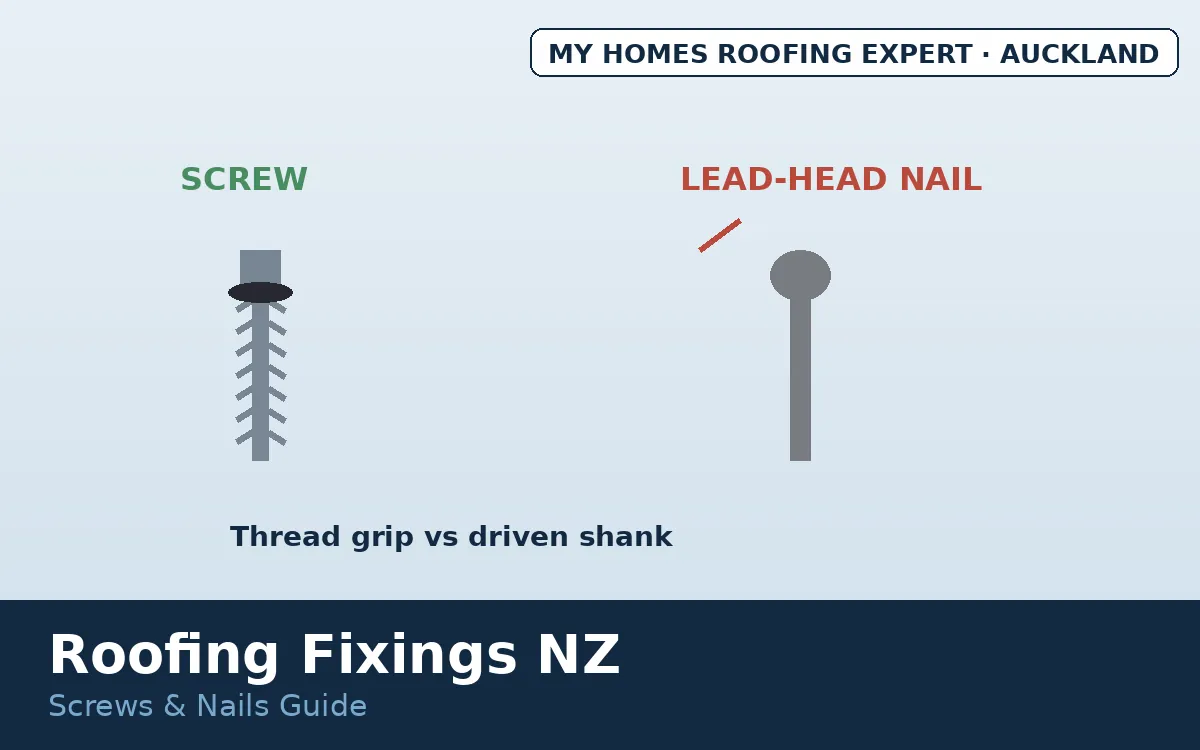
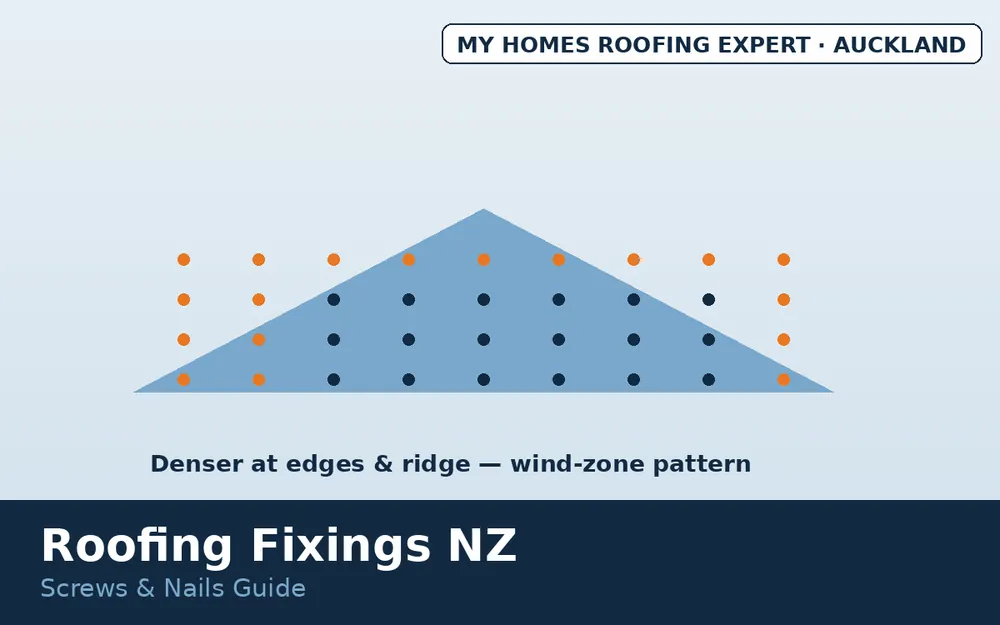
Direct answer: self-drilling screws with sealing washers, in corrosion classes matched to the environment, in patterns matched to the wind zone — the modern standard every current installation follows. The components: thread, gripping purlins against the withdrawal forces of wind and thermal cycling; sealing washer, the rubber gasket making each penetration weathertight; coating class, the corrosion rating that must meet or exceed the environment — coastal zones demanding the higher classes for exactly the reasons our exposure-grade guide covers for sheet; and pattern, the fixings-per-sheet schedule from wind-zone assessment and manufacturer tables, densest at edges and ridges where uplift concentrates (our wind zone guide explains the ratings). The legacy alternative — lead-head nails — secured generations of NZ corrugate honourably and now defines the upgrade market: shanks worked loose by decades of movement, heads lifting, the classic popped-fixing silhouette on every older roofline.
The aging story — washers, withdrawal, and salt
Fixings age on three clocks. Washers: UV and heat cycle sealing rubbers toward cracking on a 15–25 year schedule — faster than quality sheet — and a roof of cracked washers leaks at hundreds of points at once, which is why washer condition headlines every professional inspection and why re-screwing is the standard mid-life service on Auckland long-run. Withdrawal: thermal expansion works fixings outward fractionally with every hot-cold cycle, decades of which loosen nails decisively and screws far less — loose fixings then lift in wind, the opening move of the sheet-loss sequence. Corrosion: fixings corrode before sheets wherever classes were mismatched, the rusty-screw-line freckling that coastal inspections find on inland-spec roofs. All three clocks are readable from the ground with binoculars — popped heads, rust trails at fixing lines — and all three are serviceable short of re-roofing, via our roof repair team's re-fix work.
Compatibility — the galvanic detail
Fixings and sheets are a chemical couple: mismatched metals corrode galvanically at every contact point, concentrating failure exactly where strength matters. The working rules: fixing coatings compatible with aluminium-zinc coated steel per manufacturer tables; stainless where specifications call it, with its own compatibility notes; and the copper rule absolute — copper and its runoff near coated-steel fixings is the early-failure recipe our copper guide details. None of this is judgment territory; it is published-table territory, which is what makes silent quotes on fixings worth questioning.
What Cost, Risk and Service Factors Apply?
Money-wise, fixings are rounding-error material costs doing structural work — the place where saving is most foolish and upgrading cheapest. Service-wise, the lead-head conversion and washer-cycle re-screw are contained, fast jobs that reset a roof's storm readiness for a decade-plus. Risk-wise, every fixing job is height work on patterns that matter — professional territory, with the homeowner's role the binocular check and the call.
How Do You Get fixings checked in Auckland?
My Homes Roofing Expert inspects, upgrades, and re-screws roof fixings across Auckland — classes matched, patterns to zone, washers renewed. Call 022 501 9921 or book a free inspection.
What Questions Do Auckland Homeowners Ask?
What fixings should NZ roofs use?
Sealing-washer screws, corrosion-classed for the environment, patterned for the wind zone.
Why screws over nails?
Thread grip resists the withdrawal that loosens nails over decades — the storm difference.
What are corrosion classes?
Durability ratings matching fixing coatings to environment severity — higher classes for the coast.
Why do washers crack?
UV and heat age them on a 15–25 year clock — re-screwing is the standard mid-life renewal.
What does wind zone change?
Fixing density and pattern — more screws, concentrated at edges and ridges, by published schedule.
Topics covered
- roofing screws vs nails
- lead head nails
- class 4 screws coastal
- roof screw replacement
- wind zone fixings