
Salvage steel for the shed, new steel for the house — and buyer inspection as the whole craft in between: light-test for pinholes, read the fixing-hole history, match profiles exactly, and treat old paint as lead until tested. The savings are real where the stakes are low.
| Use | Verdict | Why |
|---|---|---|
| Sheds, woodsheds and lean-tos | Yes | A decade of service justifies salvage pricing |
| Fencing, cladding, rustic projects | Yes | Weathered character is the point |
| Profile-matched patching | Yes | Weathered sheets visually match an old roof where new steel would shout |
| House roofs | No | Unknown remaining life over living space is a false economy |
| Warranted or consented work | No | No professional warranty covers unknown material, and compliance documentation wants known products |
| Tank-water catchment | No | Unknown coatings and possible lead paint disqualify salvage |
Second-hand roofing iron has an honest place in NZ's material culture — the weathered corrugate on a thousand sheds, fences, and baches got there at a fraction of new pricing, and salvage keeps good steel working. The equally honest boundary: used sheet belongs on projects that can absorb unknowns, and a house roof is not one of them. This guide draws the line and equips the buyer on the right side of it.
The economics tempt because they are real — salvage sheet can cost a small fraction of new — and the risks hide because they are invisible: remaining coating life, pinholes in the making, and the fixing-hole history every used sheet carries.
Is second-hand roofing iron worth it?
Direct answer: yes for sheds, fences, rustic builds, and matched patching; no for house roofs and anything long-horizon. The yes column: outbuildings — garden sheds, woodsheds, and lean-tos where a decade of service justifies salvage pricing; fencing and cladding — corrugate's second career, where weathered character is the point; rustic and creative projects — the bach aesthetic, planters, interior features; and profile-matched patching — weathered sheets visually matching an old roof where new steel would shout, the matching logic our sheet replacement guide notes. The no column: house roofs — unknown remaining life under your living space is a false economy with a leak schedule; warranted work — no professional warranty covers unknown material, which is why our installations specify new; consented work — compliance documentation wants known products; and tank-water catchment — unknown coatings and possible lead paint disqualify salvage, per our drinking water guide.
Inspecting used sheets like a buyer who has been burned
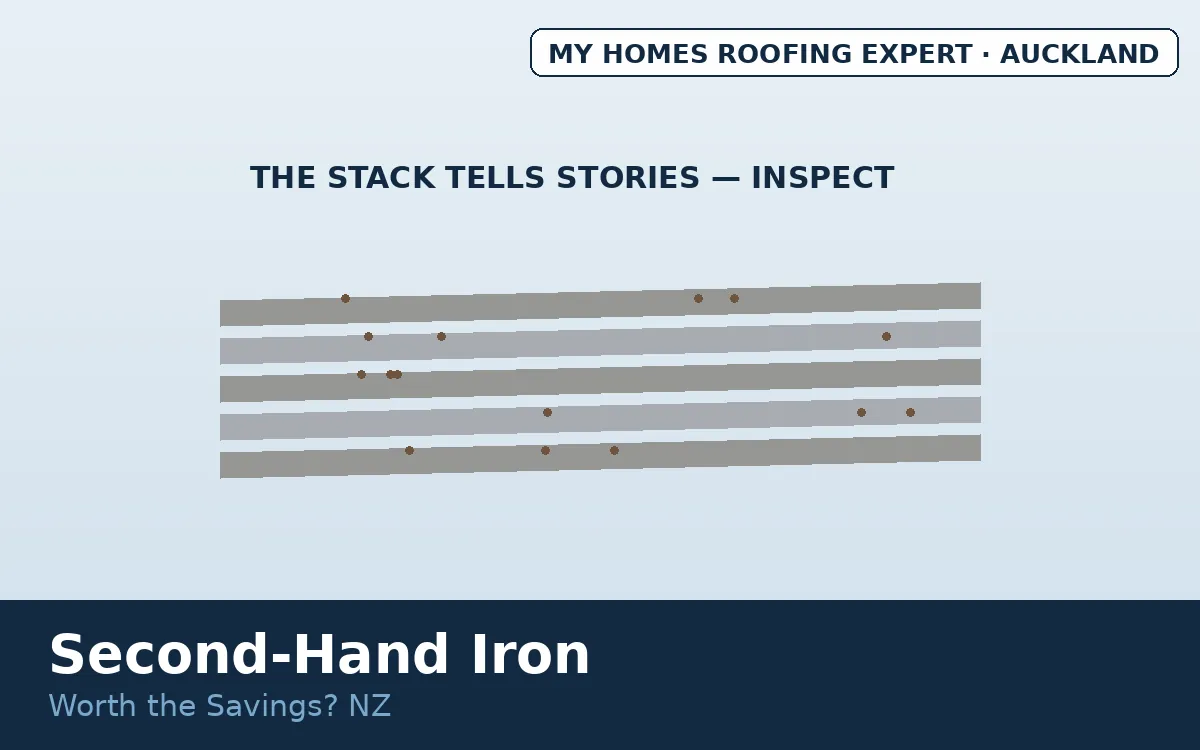
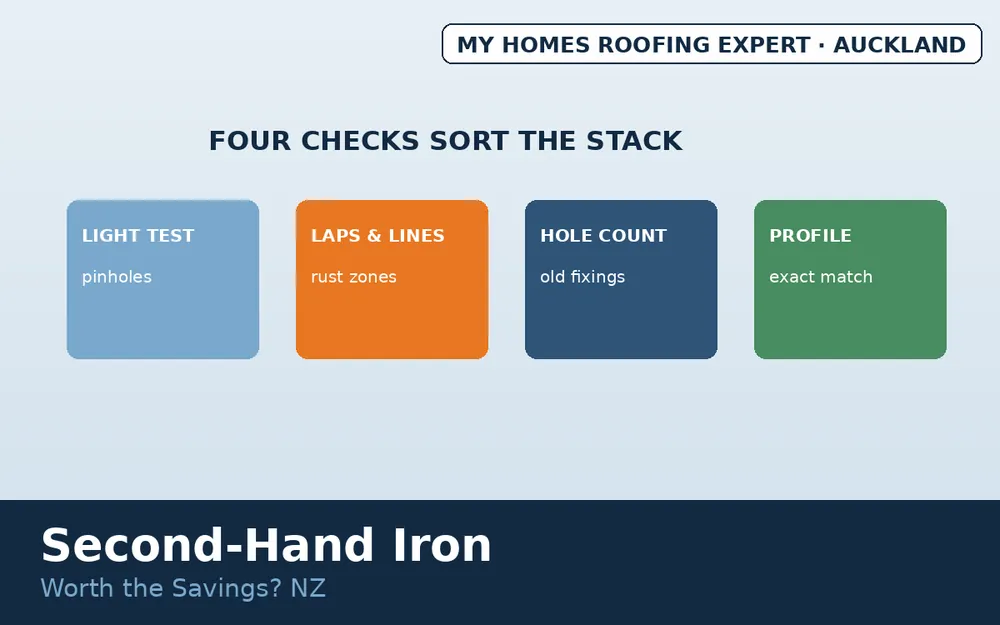
The checklist, sheet by sheet: the light test — hold sheets up to bright sky and pinholes announce themselves, the single highest-value check; lap edges and fixing lines — corrosion concentrates where water lingered and fasteners sat, so read those zones hardest; the hole history — count previous fixing holes and picture them on your purlin spacing, because holes between supports become sealing jobs and sheets on their third life rarely align with anything; profile fidelity — corrugate profiles have varied across decades and brands, and a near-match laps badly, the same geometry rule our profile guide applies to new; coating adhesion — flaking paint and chalking surfaces price in the recoat they will need; and straightness — kinked and trodden sheets fight installation. Reject freely: salvage pricing exists because rejection is part of the deal.
The lead paint caution — old sheet's serious clause
Pre-1980s painted iron can carry lead-based paint, and the hazard activates on disturbance: sanding and grinding make breathable dust; waterblasting spreads it across the section; burning off is the worst of all options; and rainwater collection over leaded paint routes the problem into drinking water. The disciplines: test suspect paint before any disturbance (kits and lab services exist), prefer encapsulation (sound overpainting) to removal where the substrate allows, and keep unknown painted sheet categorically off catchment roofs. None of this retires salvage steel — bare weathered iron and post-lead-era sheet sidestep the issue — but every used-iron buyer should carry the caution, and current official guidance is the authority where projects meet the question seriously.
What Cost, Risk and Project Factors Apply?
The arithmetic that keeps salvage honest: sheet savings minus rejection rate, extra installation time negotiating holes, and the recoat many lots need — still a win for the shed, rarely for anything with a warranty expectation. Installation realities are unchanged: correct fixings (new, always — per our fixings guide), underlay where the structure warrants it, and height-work safety regardless of the steel's age. The garage and carport tier is where we meet salvage questions most — and where the honest answer is often that entry-grade new sheet prices closer than buyers expect.
How Do You Get straight advice on the budget tiers in Auckland?
My Homes Roofing Expert prices new entry-grade against salvage honestly for Auckland's sheds, garages, and outbuildings — and specifies new where the project deserves it. Call 022 501 9921 or get in touch.
What Questions Do Auckland Homeowners Ask?
Worth buying used iron?
For sheds, fences, and rustic projects, often yes; for house roofs and warranted work, no.
What to check?
Light-test for pinholes, read laps and fixing lines, count holes, match profiles exactly.
Why do old holes matter?
Every hole must land on support or be sealed — and they rarely align with new framing.
Lead paint risk?
Pre-1980s paint can carry it — test before disturbing, never over drinking-water catchment.
Tank-water roofs?
Known materials only — salvage's unknowns disqualify it from catchment duty.
What else should you know?
How do you inspect used roofing iron before buying it?
Hold sheets up to bright sky, because the light test shows pinholes. Read the lap edges and fixing lines where corrosion concentrates, count the previous fixing holes against your purlin spacing, and match the profile exactly, since a near-match laps badly. Check coating adhesion and straightness, and reject freely: salvage pricing exists because rejection is part of the deal.
Topics covered
- used corrugated iron NZ
- recycled roofing sheets
- cheap roofing iron Auckland
- salvage corrugate
- used roofing inspection